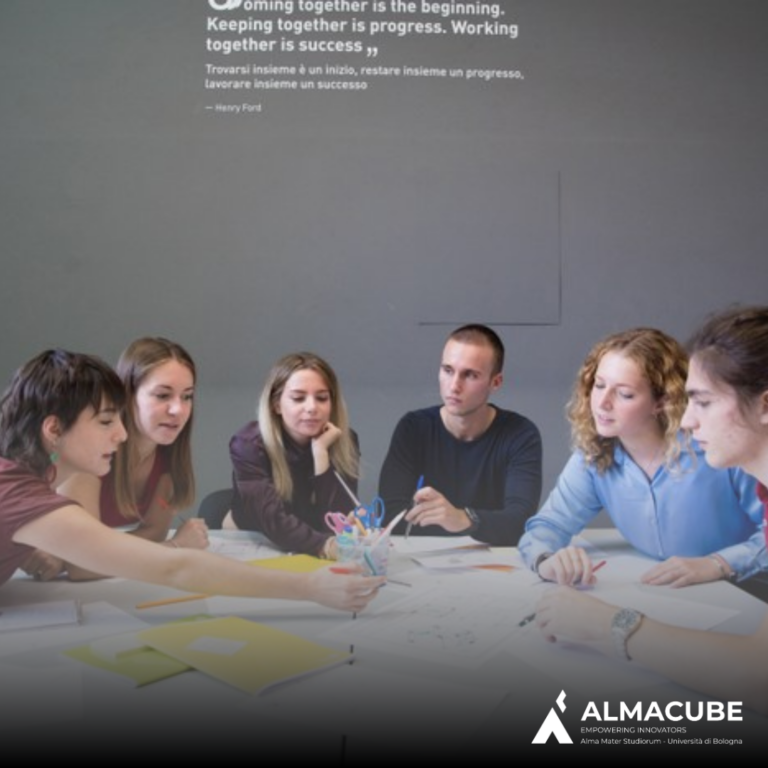
Facilitation is not just a job — it’s an attitude. It means taking care of the quality of interactions between people, not only of the results they produce. It means creating the conditions for everyone to think, express themselves, and collaborate freely.
At Almacube, facilitation is part of our DNA: it supports every open innovation journey, every program involving companies, startups, and young talents. It is the way Almacube promotes innovation, placing people at the center and creating environments where ideas can truly take shape together.
In this sense, anyone who works with people – whether a team manager, teacher, facilitator, coach, or coordinator – is, consciously or not, facilitating something. What connects these roles is a shared intention: to work well and help those around us do the same.
Facilitation is the art of enabling collaboration to flow, allowing ideas to emerge, and ensuring everyone feels safe and valued. It is a practice that combines empathy, emotional awareness, and structure.
In a world that seems to move faster every day, it is easy to forget what truly guides us. Before goals, results, and profits, there are people, with their emotions, energy, and need for connection. Facilitation invites us to pause and pay attention to how we speak and listen, how we make decisions together, and how we learn from one another.
At Almacube, facilitation is also a daily approach: it is the way innovation is supported and trust is built between those who bring ideas and those who want to turn them into reality. It is also the method we use to manage our internal processes and activities, encouraging collaboration, listening, and co-creation within the team itself.
A particularly meaningful example is the Employee Experience project developed with Michelin, which was also recognized by SMAU as a successful case for its positive impact on employee satisfaction and quality of life.
In that initiative, emotional facilitation played a key role in creating an atmosphere of trust and collaboration within a team at the Alessandria plant. It was not just a methodology for running workshops, but a true shared culture that gradually became an integral part of the site. New internal facilitators emerged from that experience and today are able to support other teams, drawing on what they learned together.
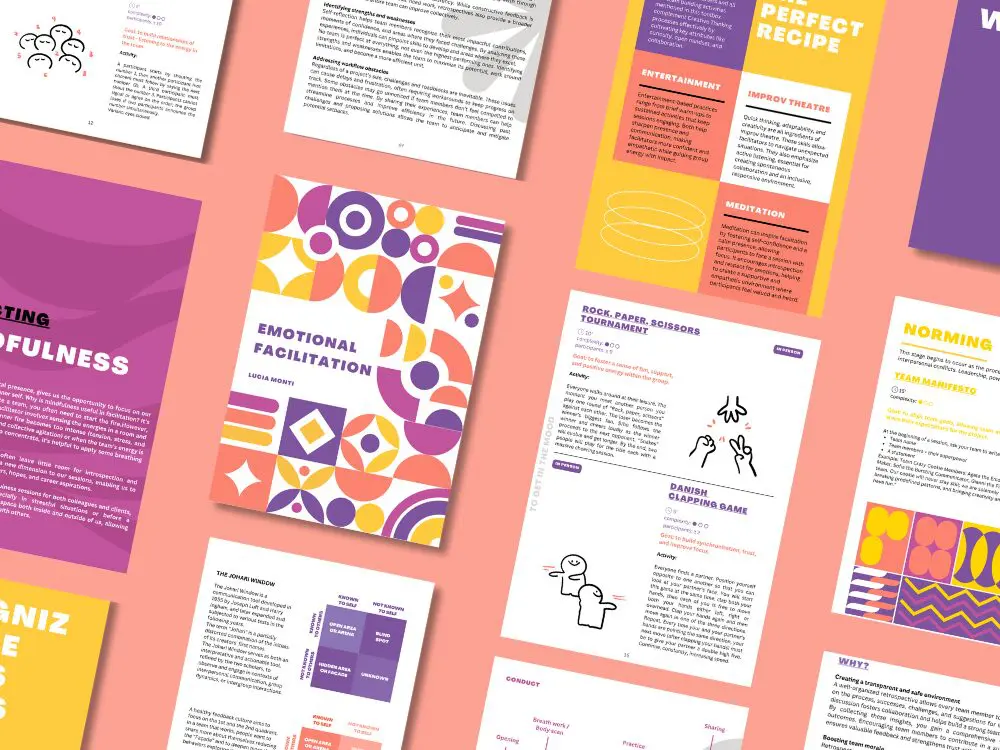
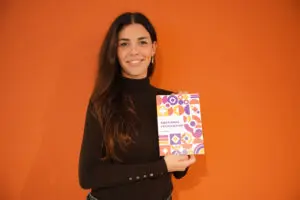
The book Emotional Facilitation by Lucia Monti, innovation coach at Almacube, explores this very approach: how emotional intelligence, mindfulness, and creativity can shape more meaningful collective experiences. Through practical tools, reflective exercises, and creative prompts, it invites readers to rediscover the human side of teamwork and learning. The activities designed for students, professionals, and creative teams, aim to create spaces where people can connect, trust, and grow together.
This book also reminds us that emotional intelligence is a key skill for anyone working with others and it can be learned and trained. The ability to read a situation, manage tensions, and foster psychological safety is not a gift reserved for extroverted or particularly sensitive people.
This handbook is for those who want to bring a spark, a new impulse, into their working life. It is for those seeking inspiration and creativity to guide meetings, run workshops, create the right atmosphere in a room, and become more self-aware. It is a book for the curious, born from the meeting of experiences, experiments, and ongoing dialogue that combine design methods, theatre, mindfulness and meditation, performance, and entertainment.